
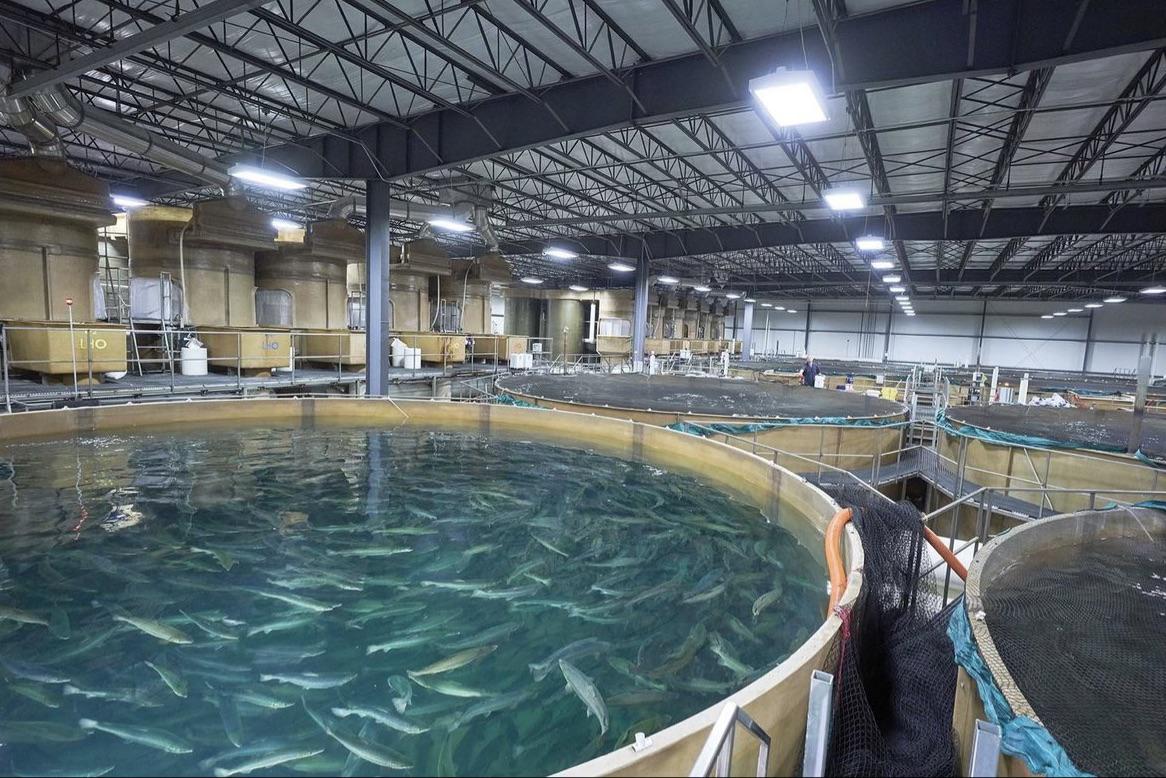
Recirculating aquaculture systems run on tight margins. Every litre of water is cleaned and reused, every kilogram of feed is accounted for, and a problem in a closed tank escalates faster than it would in open water. That combination is exactly why RAS operators tend to see the clearest return from AI monitoring.
Labour is the cost that never stops
Ask a RAS manager where the money goes and labour is near the top. Someone has to check tanks, grade fish, count stock, and test water, day after day. Much of that work is routine observation, watching for something that’s usually not there.
Vision-based monitoring takes over the routine watching. Cameras track biomass, counts, and behaviour continuously, so staff spend less time on manual check-ins and more on the decisions those check-ins were meant to inform. The fish are observed more often, not less, but without a person standing over every tank.
Problems compound in a closed system
In a sea pen, a water-quality dip dilutes into the ocean. In RAS, there’s nowhere for it to go. Dissolved oxygen, ammonia, and temperature all have to stay inside a narrow band, and when they drift, stock is at risk within hours.
This is where continuous monitoring earns its place. Behavioural changes often show up before a sensor threshold trips, fish go off feed, crowd differently, or slow down. A system watching around the clock flags those signals early, giving operators time to act before a drift becomes a loss.
Feed precision on a system that rewards it
RAS production is feed- and energy-intensive, so accurate biomass translates straight into cost control. Knowing the real weight of stock in each tank lets you feed to actual appetite and growth stage rather than a schedule, tightening feed conversion and keeping waste, and the nitrogen load that comes with it, down.
It works with what you already run
The reasonable worry about adding AI to a RAS site is that it means ripping out the controls you trust. It doesn’t. Vision-based monitoring sits alongside existing SCADA and PLC systems, adding measurement of the fish themselves, biomass, counts, and behaviour, that chemistry sensors can’t provide. Data exports by CSV or API into the farm-management software you already use.
For land-based operators weighing the move, our AI in RAS page goes deeper on integration, and a free video analysis lets you see what the system reads from your tanks before committing to hardware.
- RAS
- land-based aquaculture
- AI monitoring
See it on your own fish
Send us footage and get a free AI video analysis in 96 hours. No hardware, no cost.